 en
▼
en
▼
The series units, besides standard operation in a vast class of radioelectronic and electrical equipment, are meant to be used in critical missions: operation in emergency conditions, operation in case of compromised sealing of the equipment compartment, short-term higher than max power delivery, short-term full operation during surge or drop of input voltage.
AEPS-GROUP power converters of TESND series in robust cases with mounting flanges are mainly meant for universal input of DC mains 28W (16 … 50 VDC) and provide output power up to 250 W in standard case operating temperature range of -60 °С … +125 °С. Also available inputs – 28, 48W, 48.
Electrical features: all single channel TESND units utilize output synchronous rectification, which significantly increases their efficiency. TESND250 unit contains ability of active current sharing parallel operation.
Constructional features: series units TESND are made in compact dimensions, with high efficiency, power density of 50 to 82 W/inch3. Case base has stiffening ribs and also serves for conductive cooling. Considering that all components significant in weight are connected to the base and submerged in heat-transferring potting – resistance to and durability against mechanical stress is unique.
AEPS-GROUP series TESND are optimal to be utilized in application fields 1, 2, 3, 4, 5, 6, 7, 8, 9, 10, 11 – for aerial objects at heights up to 15 km in unsealed and unprotected spaces: planes, drones, helicopters, hot air balloons and gliding devices, meteoprobes. Also applied in all types of land transport – railway locomotives and wagons, cars, tracked vehicles. The nits are also an optimal fit for telecom equipment, mining, supercomputers, radars and informational displays and screens, located in outdoors conditions. At the same time, TESND units operate in Arctic and Antarctica, in mountains at all heights and in cold or hot deserts etc.
To know more, read following essays: About input ranges, About efficiency, About planarity.
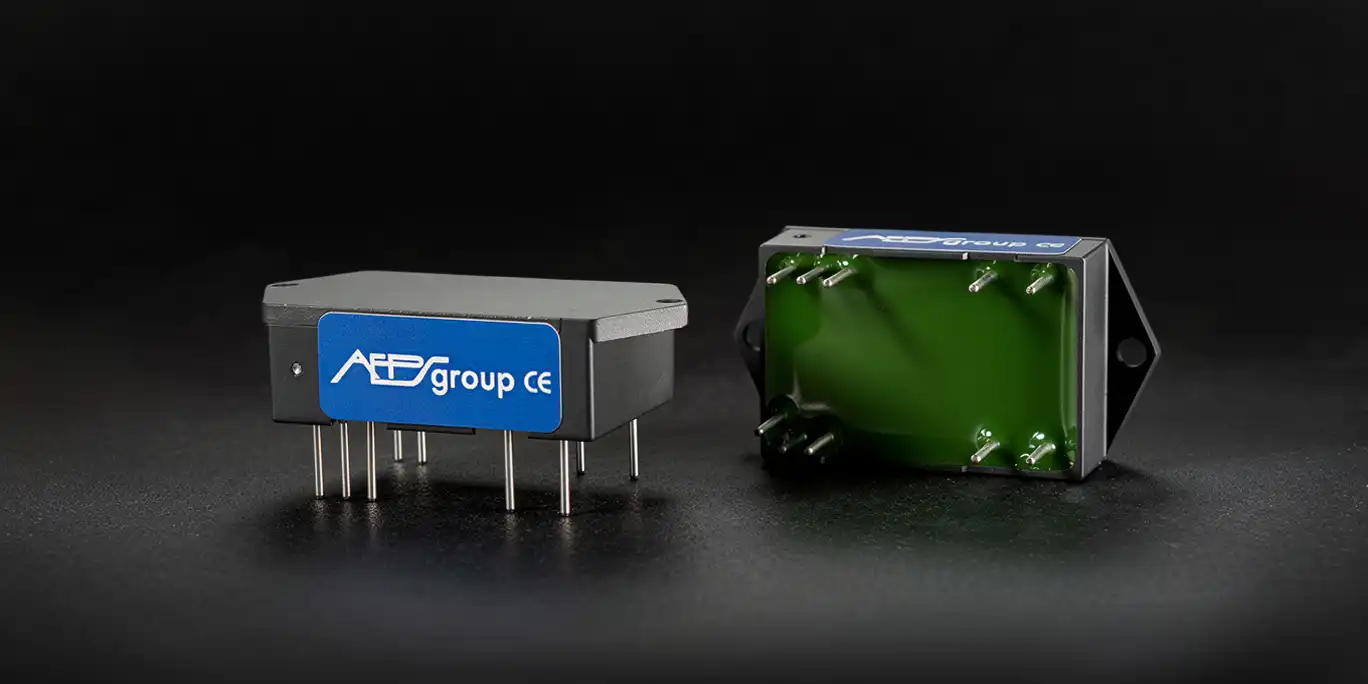
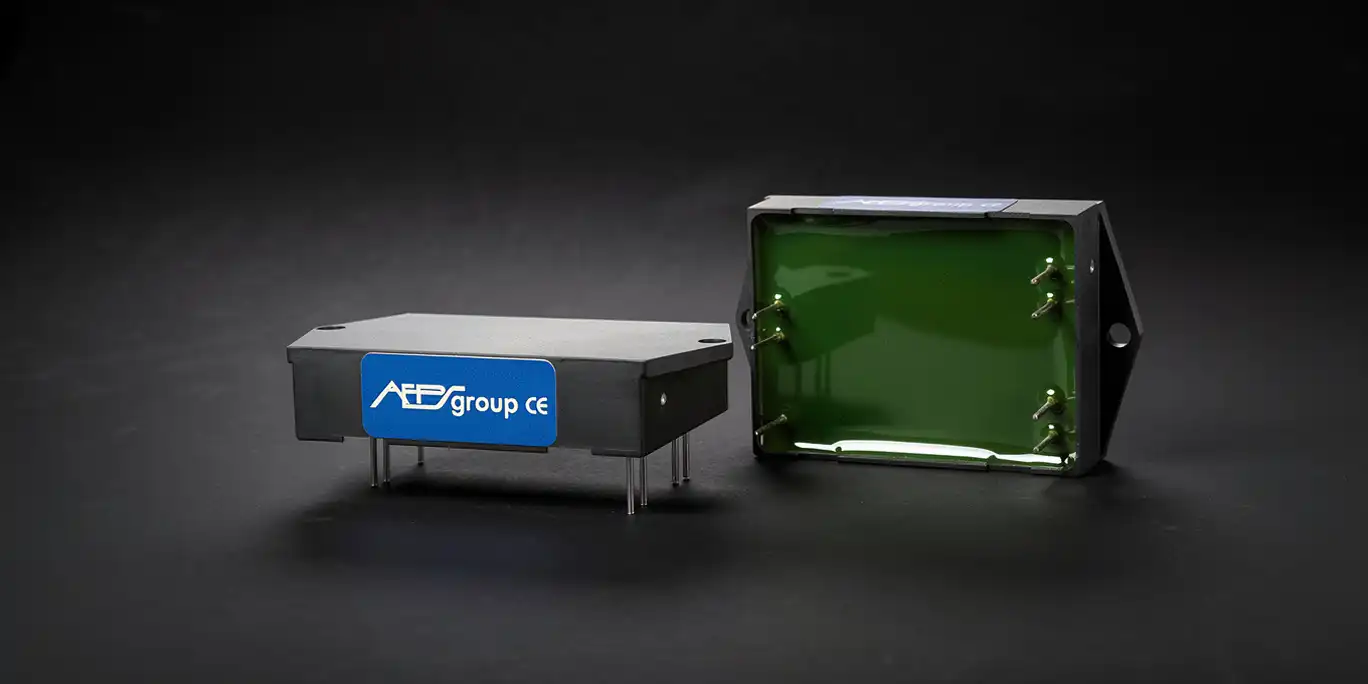


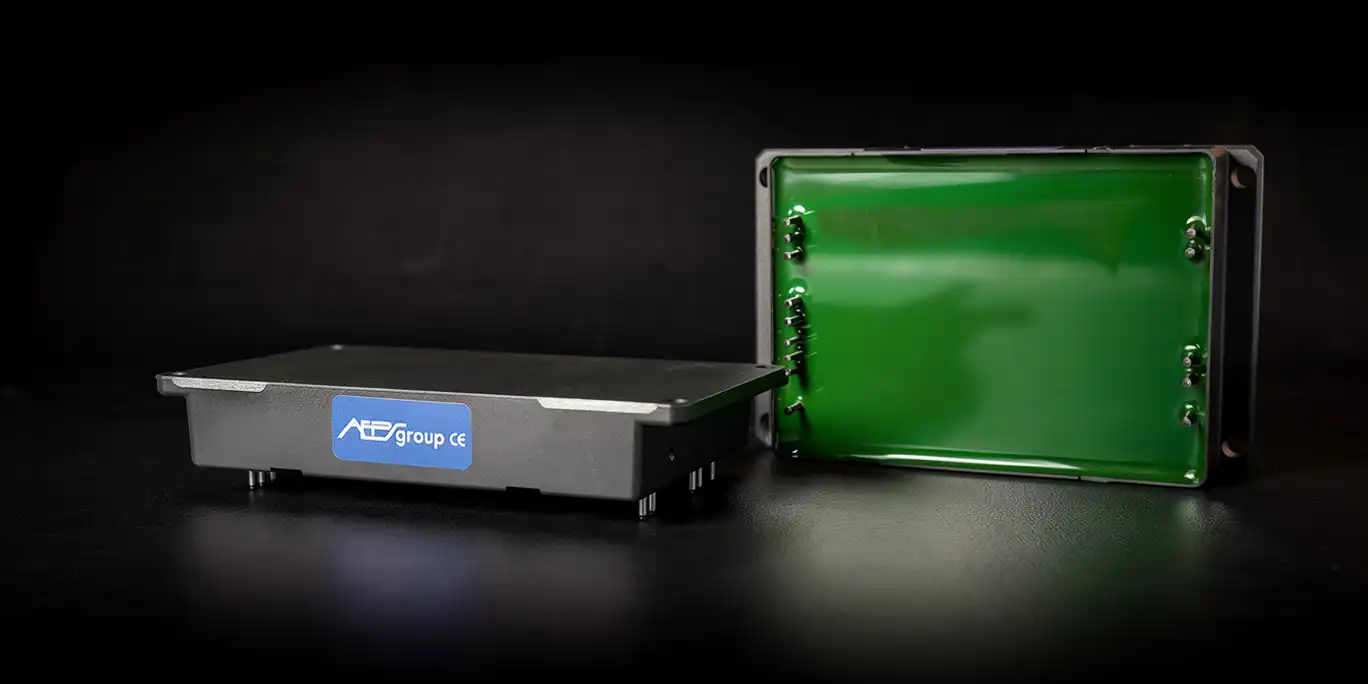
Standard PCB-mount converters rely on pins for mechanical stability, which is a major point of failure in high-vibration environments. Our TESND series features a rugged CNC milled case with integrated mounting flanges. This allows you to bolt the unit directly to the system chassis or a heavy-duty coldplate. By offloading the mechanical stress from the solder joints to the flanges, you ensure ultimate reliability in defense, aerospace, and heavy machinery applications where constant shocks and vibrations are the norm.
Yes, and this is a significant advantage for high-density board designs. The TESND series supports up to 3 galvanically isolated output channels within a single compact module (available in S, D, and T configurations). This allows you to power different parts of your circuit — for example, digital logic, analog sensors, and high-power actuators — from a single component, drastically reducing the total footprint, weight, and complexity of your power system.
The TESND modules, especially high-power units like the TESND250, are designed for baseplate conduction cooling. Thanks to the integrated flanges and a flat CNC-machined base, the unit provides a perfect thermal interface with your heatsink or coldplate. By using a high-quality thermal interface material (TIM), you can efficiently dissipate waste heat even in completely sealed, fanless enclosures, maintaining stable operation at case temperatures up to +125°C.
Absolutely. The TESND series is built to survive “dirty” power. With our standard “28W” (16-50 VDC) input range, these converters easily absorb voltage spikes and load dumps typical of 24V and 28V military and industrial vehicle grids. For even more demanding systems, we offer wide input options that ensure the output remains stable even during severe battery voltage fluctuations or cold cranking.
TESND converters are specifically designed for unconditioned equipment compartments. The combination of a rugged metal case and full internal encapsulation with a specialized thermally conductive compound protects the electronics from moisture, salt spray, and rapid pressure changes. This makes them an ideal fit for UAVs (drones), avionics, and high-altitude radar systems where mission-critical reliability is required under extreme climatic conditions from -60°C to +125°C.


