 en
▼
en
▼
The series units, besides standard operation in a vast class of radioelectronic and electrical equipment, are meant to be used in critical missions: operation in emergency conditions, operation in case of compromised sealing of the equipment compartment, short-term higher than max power delivery.
AEPS-group planar LP (low profile) series JETA-LP are to be used for AC mains of American standard 120 VAC, 60 Hz (100-127 VAC) and European 220-240 VAC, 50 Hz (198-242 VAC).
For such applications our input range 230W (100-264 VAC, 140-372 VDC) and frequency 50-45-60 Hz (up to 400 Hz on request) is used. It’s possible to provide units with AC input range 115 (81-138 VAC, surge 150 VAC). DC inputs may be used too in any polarity, please consult with the producer.
Made for conductive cooling systems, operational in case temperature range of -50…+95 °С. Other cooling systems may be used too (please see the datasheets).
Electrical features: all single output JETA-LP units utilize synchronous rectification which significantly increases their efficiency. All models provide active PFC. Models from JETA300-LP up to JETA3000-LP include full complex of service functions, incl. current sharing active parallel work ability (from JETA700-LP).
Constructional features: JETA-LP units are designed to be extremely compact in combination with high efficiency. This allows the units to achieve unprecedented power density of 17 to 28 W/inch3. Aluminum or copper case base includes stiffening ribs and also serves for conductive cooling. Considering that all components significant in weight are connected to the base and submerged in heat-transferring potting – resistance to and durability against mechanical stress are quite high.
JETA-LP units are most utilized in application fields 3, 4, 5, 7, 9, 10, 11 – for aerial objects at heights up to 5 km in unsealed spaces: planes, helicopters, drones, hot air balloons and gliding devices, meteoprobes. Also applied in all types of land transport – railway locomotives and wagons, cars, tracked vehicles. The units are also fit to operate for supercomputers, radars and informational displays and screens, located in outdoors conditions. At the same time, JETA-LP units operate in Arctic and Antarctica, in mountains at all heights and in cold or hot deserts etc.
To know more, read following essays: About input ranges, About PFC, About efficiency, About planarity.
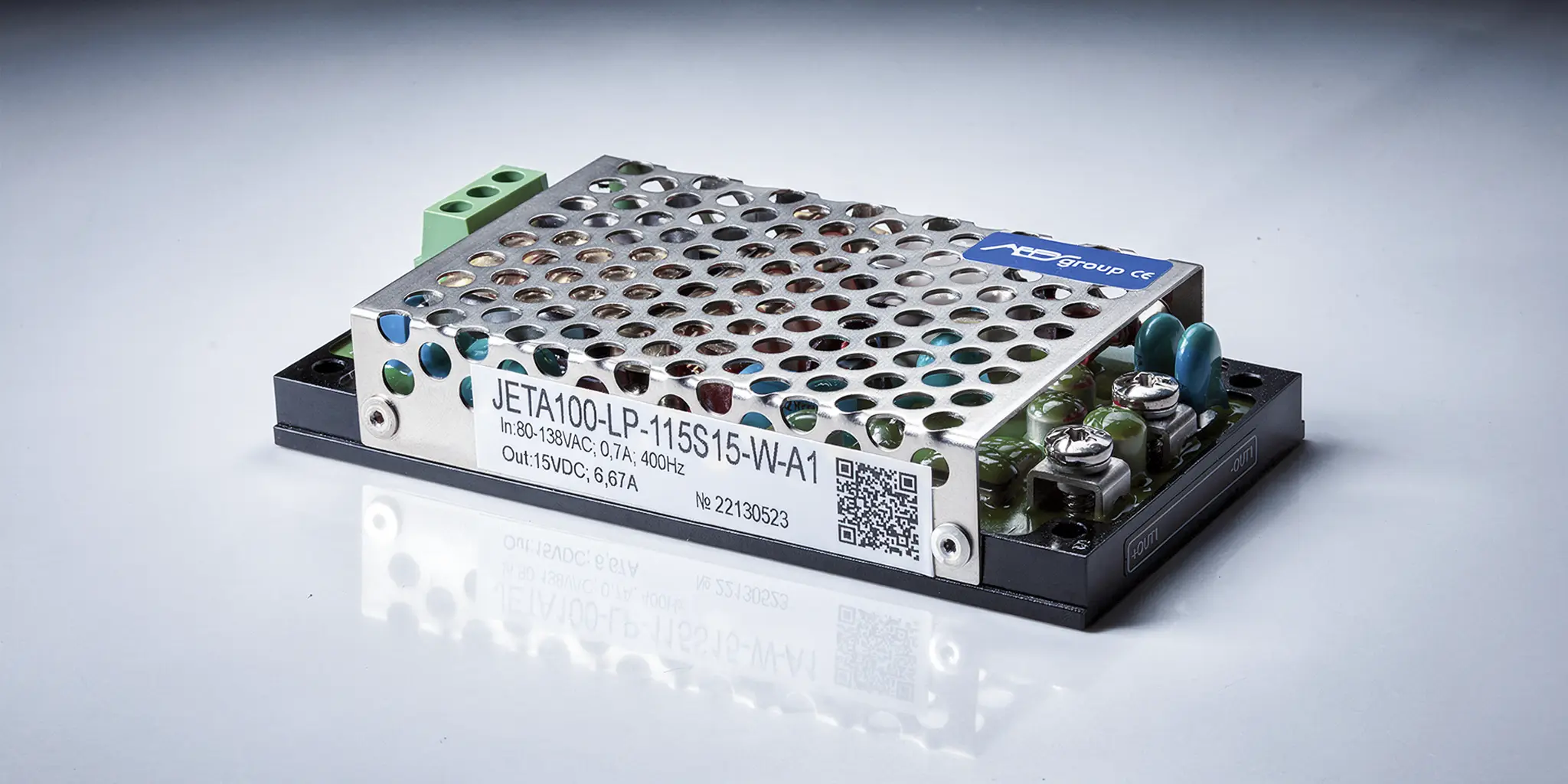
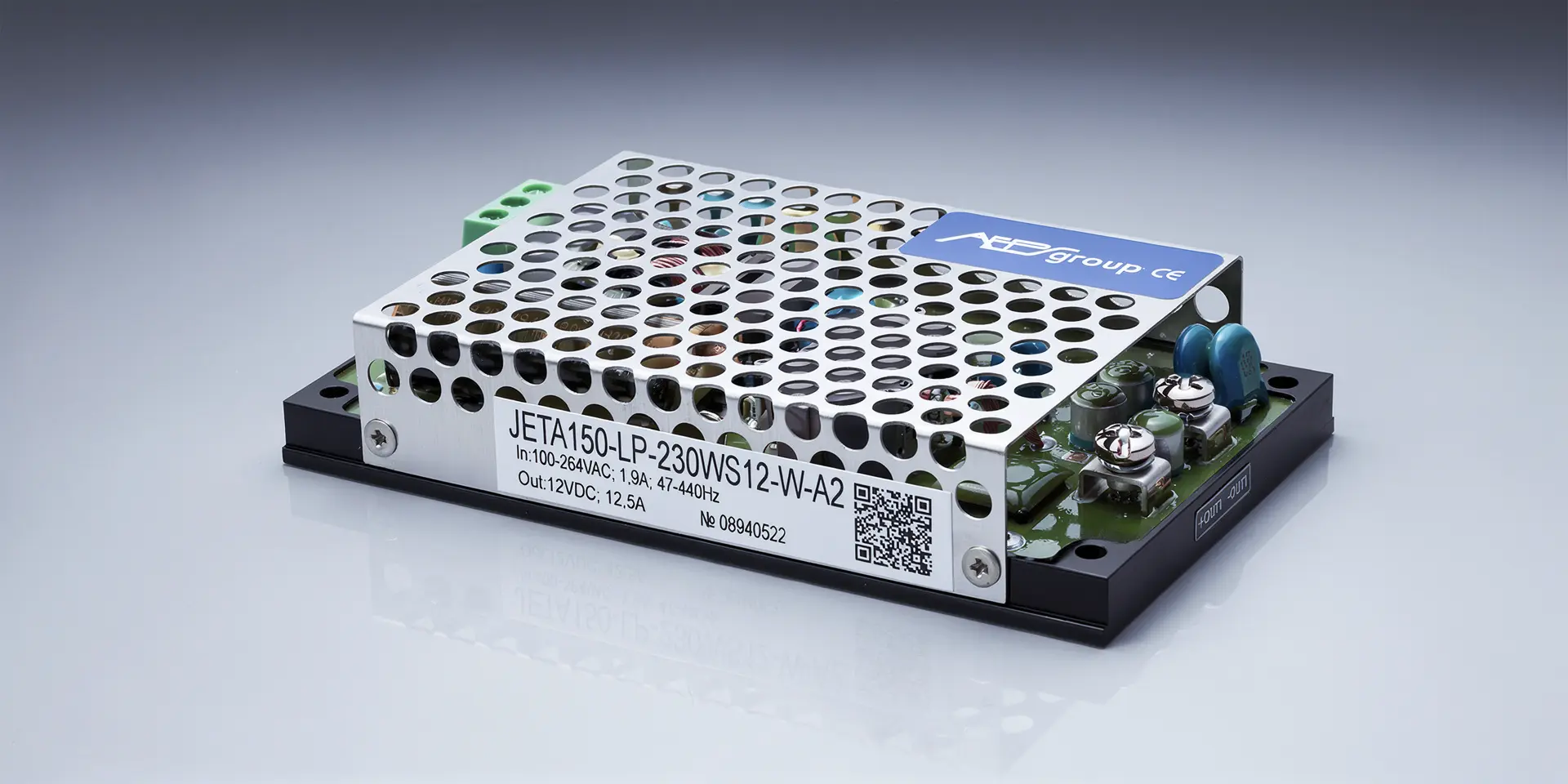
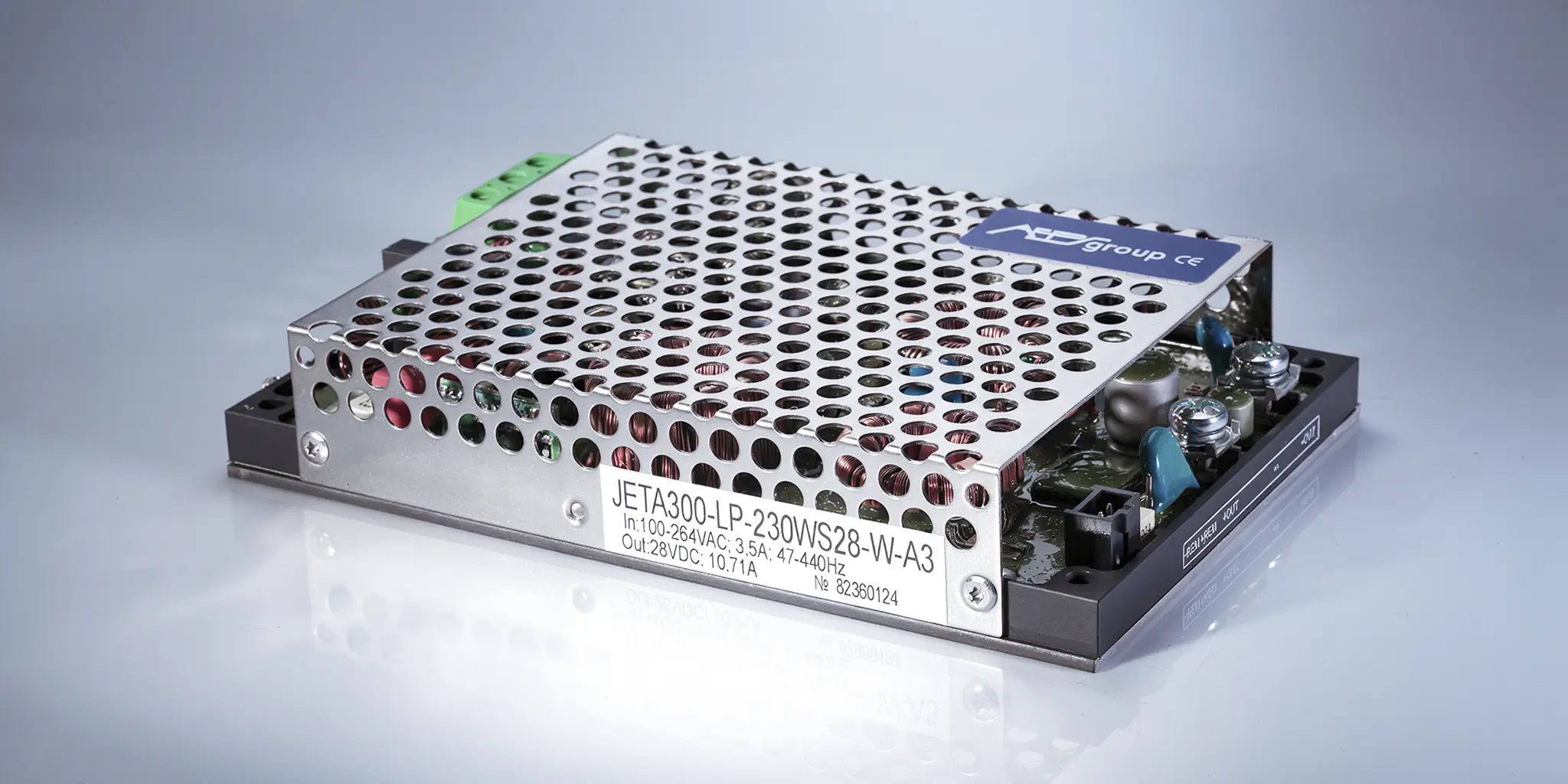
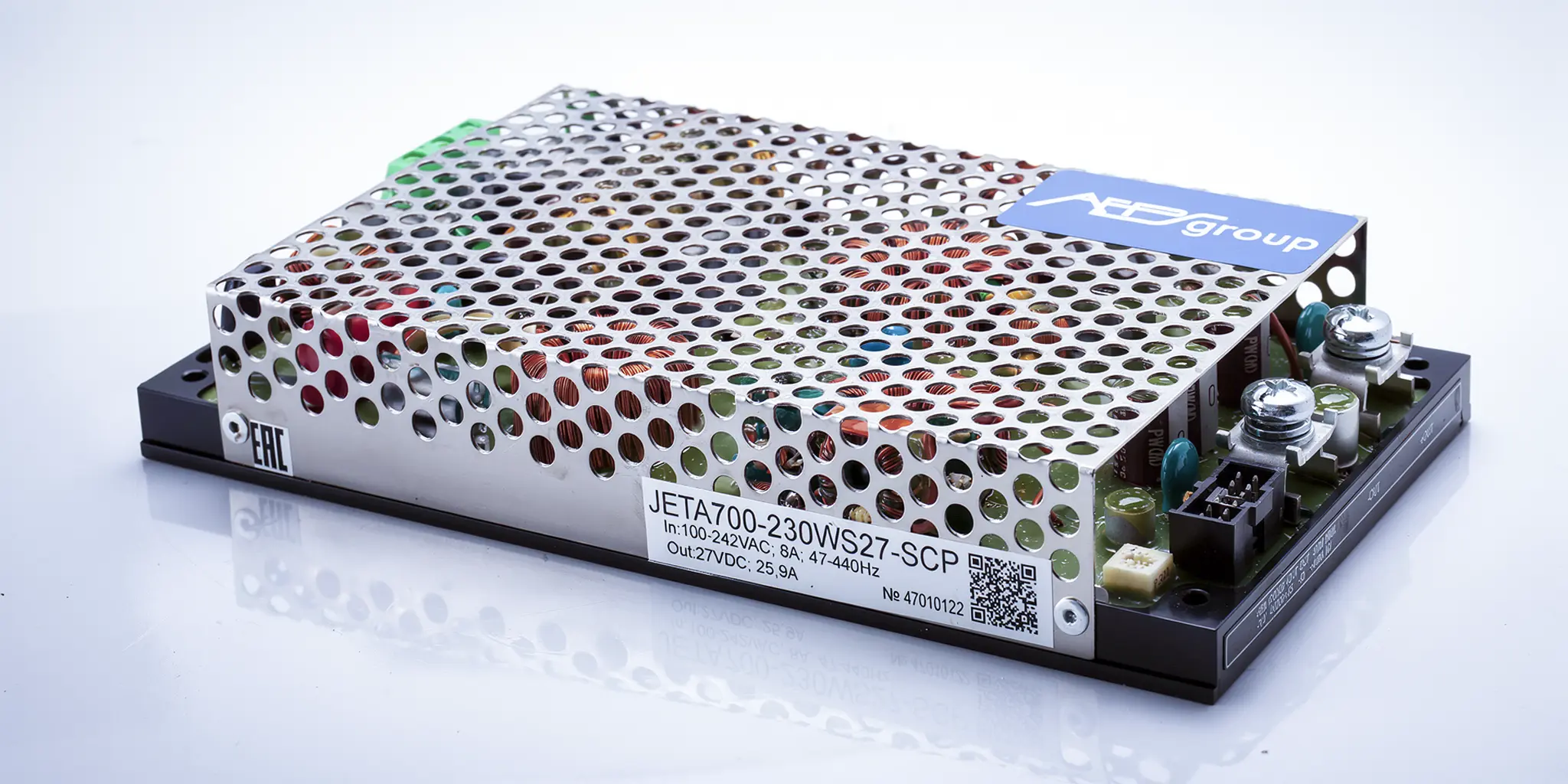
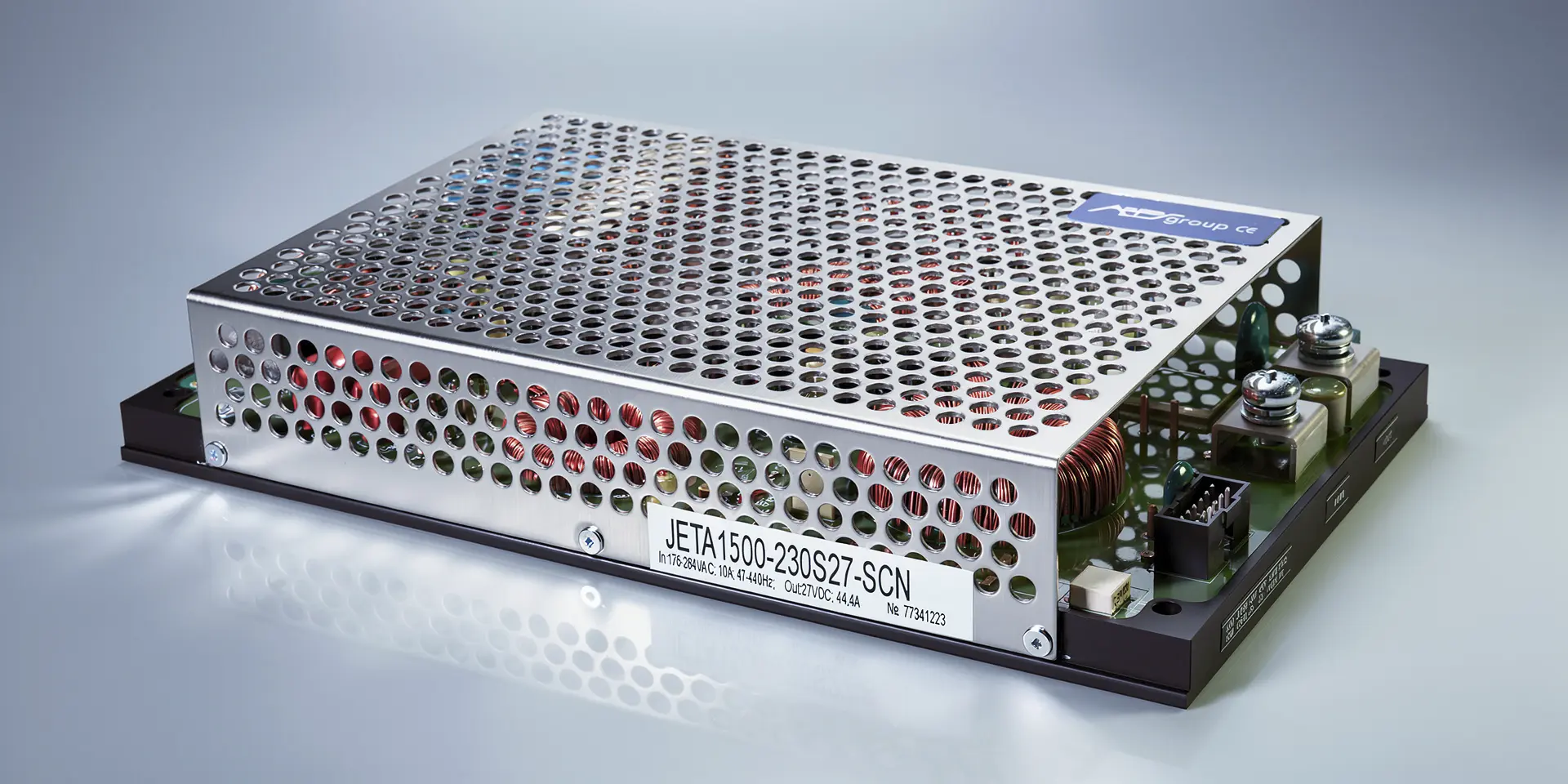
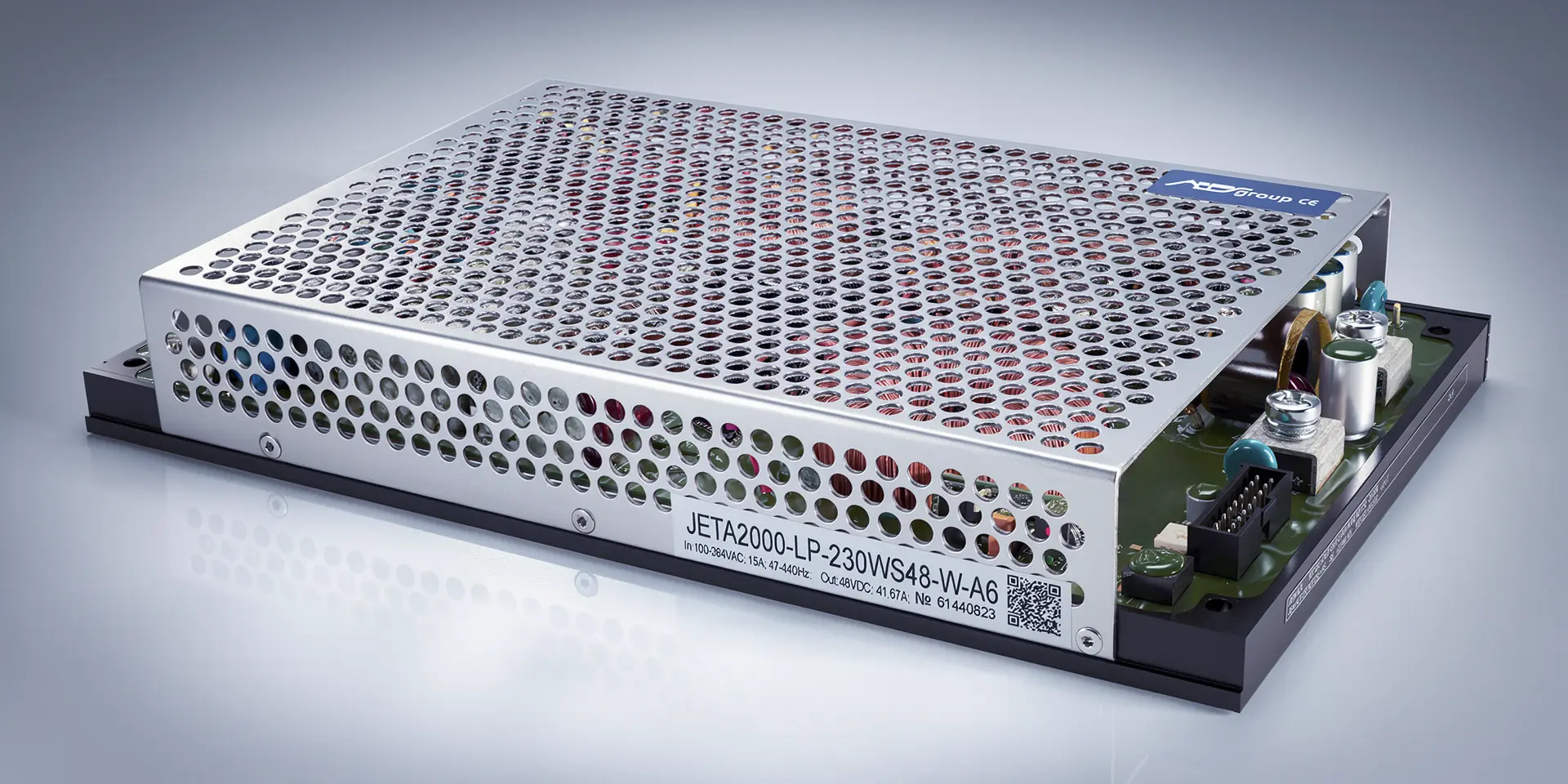
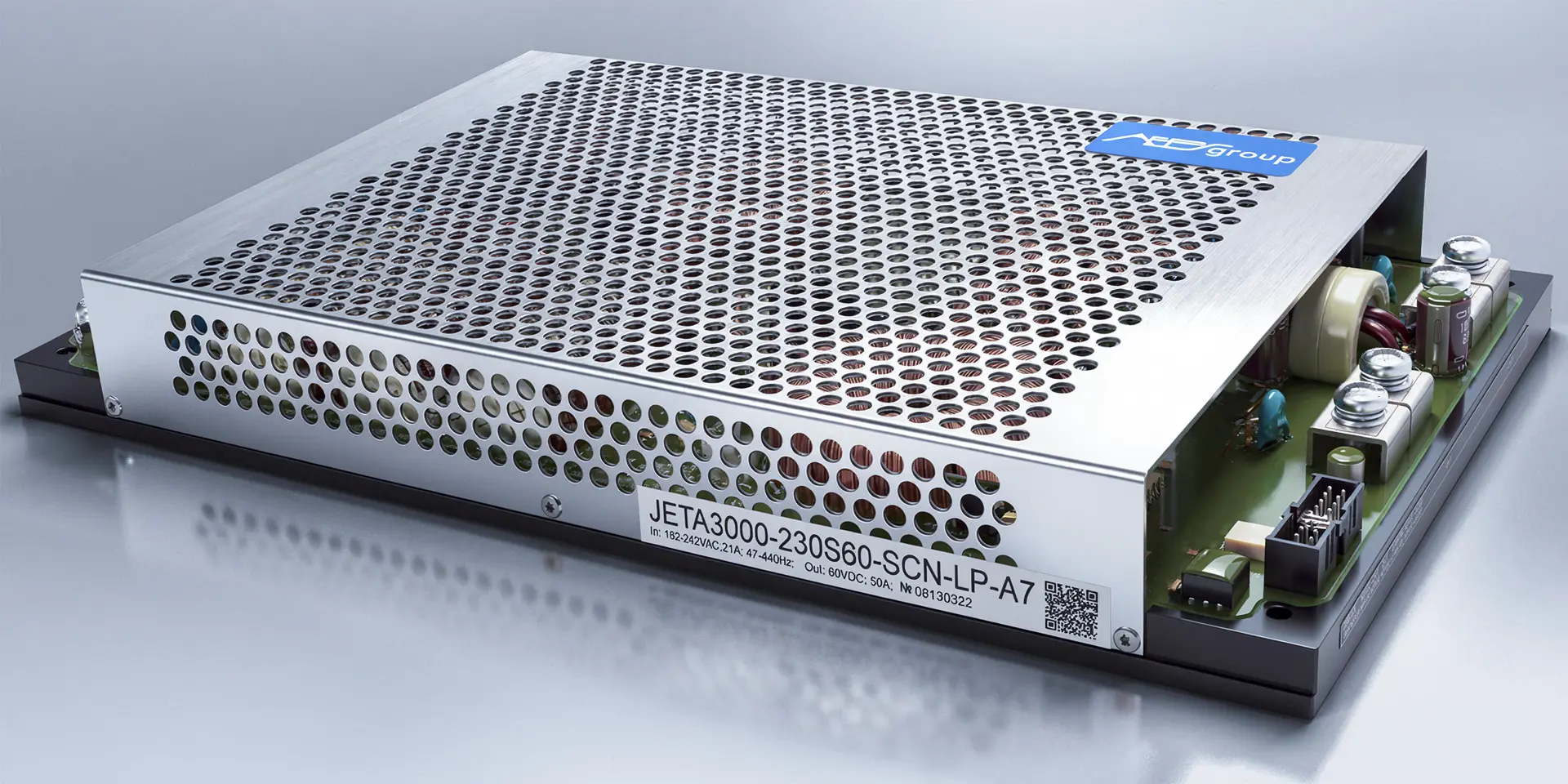
Planar technology replaces traditional bulky wire-wound transformers with multi-layer printed circuit boards (PCBs) and flat magnetic cores. For our JETA single-phase AC/DC converters, this provides three critical advantages: an ultra-low profile form factor, exceptionally high power density, and superior thermal dissipation. Additionally, automated PCB manufacturing ensures near-perfect repeatability and consistent parasitic parameters, significantly increasing the overall reliability and MTBF of the power supply.
JETA series converters are engineered specifically for mission-critical and heavy-duty applications. The internal components are protected by a ruggedized aluminum case and specialized potting compound. This encapsulation provides excellent resistance against severe shock, high-frequency vibration, moisture, and dust. Furthermore, they feature an ultra-wide operating temperature range (from -40°C or even -50°C up to +85°C case temperature), making them ideal for defense, aerospace, and outdoor industrial installations.
To maintain extreme reliability and a compact footprint, JETA power supplies utilize baseplate conduction cooling instead of vulnerable forced-air (fan) cooling. The planar magnetic components and heat-generating semiconductors are thermally bonded directly to the flat aluminum baseplate. By attaching this baseplate to a system chassis, heatsink, or cold wall using an appropriate thermal interface material (TIM), heat is efficiently drawn away from the module, ensuring safe operation even at full load in enclosed spaces.
Yes, standard JETA single-phase modules feature a universal AC input range (typically 85–264 VAC) and support both standard 50/60Hz and 400Hz frequencies often required in avionics and military applications. Most models incorporate an Active Power Factor Correction (PFC) circuit to minimize input harmonic distortion, ensure compliance with EN61000-3-2 standards, and optimize the efficiency of the power grid.
Absolutely. Many models within the JETA series are equipped with active current sharing capabilities. This allows engineers to connect multiple units in parallel to easily scale the total output power of the system or to configure an N+1 redundant power architecture for fail-safe, uninterruptible operation in telecom networks, radar systems, and data processing equipment.
Thanks to advanced planar magnetics and optimized switching topologies, JETA modules deliver exceptional energy efficiency, frequently exceeding 90-92% depending on the specific model, input voltage, and output load. High efficiency not only reduces the energy consumption of the end-system but also drastically cuts down the amount of waste heat generated, which is critical for simplifying thermal management in sealed or unventilated enclosures.


